
 Posted by
 “It was a love affair from first to last between Judy and her audience.” – Samuel L. Singer, The Philadelphia Enquirer, 1968
July 21, 1929: “The Gumm Sisters” (Judy and her two sisters) performed at the Elks Lodge in San Fernando, California.


July 21, 1933: The second night of a week-long engagement for Judy, still going by her birth name, Frances, at the Warner Brothers Hollywood Theatre in Los Angeles, California. Judy is incorrectly billed as “Frances Gum.” This is the last time Judy’s name is listed in the ads for the theater. The Meglin Kiddies were a part of the bill over at the Warner Brothers Downtown Theatre, and since Judy was still a part of the Meglin Kiddies act, it’s likely she performed with the group in addition to her solo gig.


July 21, 1938: Here are some more fun ads for Love Finds Andy Hardy.
Check out The Judy Room’s Filmography Pages on The Andy Hardy Series here.


July 21, 1941: Babes on Broadway filming continued with scenes shot on the “Interior Jonesy’s Office” set. Time called: 3 p.m.; dismissed: 5:20 p.m.
Check out The Judy Room’s Filmography Page on Babes on Broadway here.


July 21, 1943: Judy’s tour of Army camps took her to the Camp Shenango Personnel Replacement Depot in what is now Transfer, Pennsylvania, where she stayed for two days.
Judy arrived in Philadelphia, Pennsylvania, on the 21st, where she was met by Camp Shenango’s special services officer, Captain Maxcie O. Brock. She visited the camp’s headquarters to “pay her respects to the post commander, Col. Zim E. Lawhon.” Her first performance at the camp’s service club was “tumultuous and enthusiastic,” while her second performance was the same partial request show she had been giving. She then performed at “a recreation hall show where she sang another request program.” A couple of months later, the camp changed its name to Camp Reynolds.
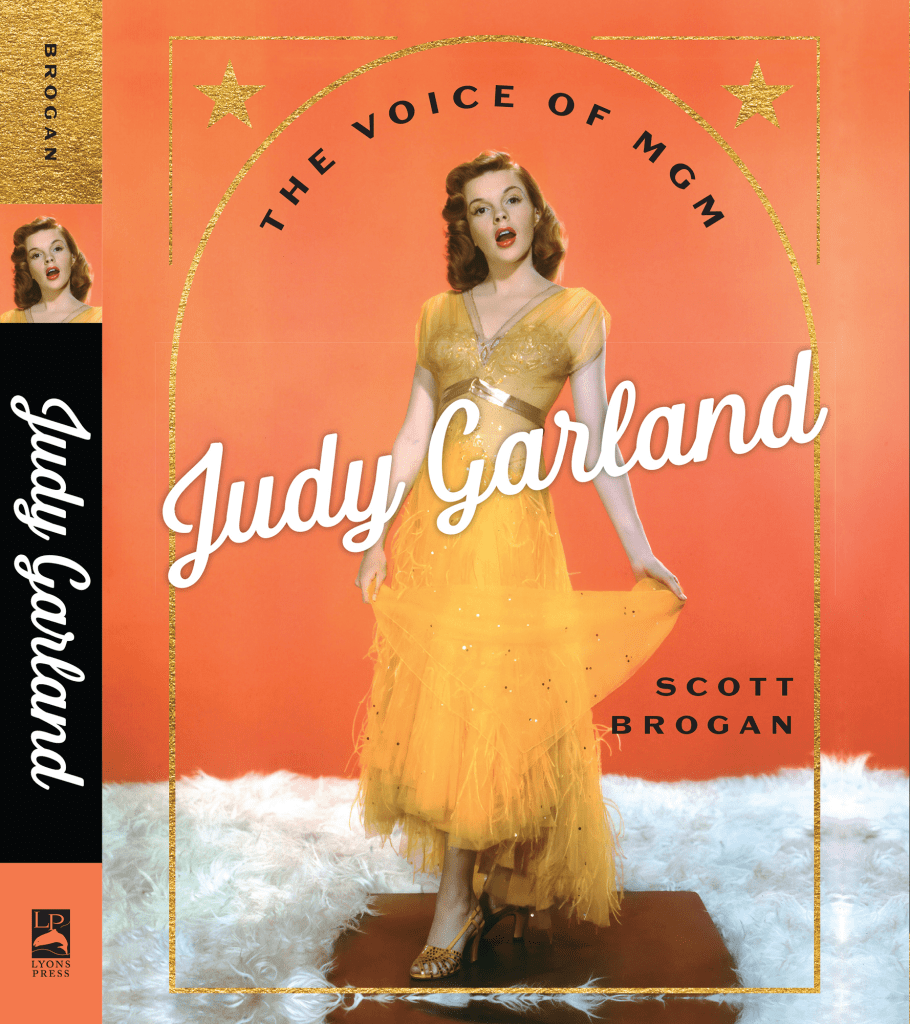
Read all about Judy’s first summer 1943 USO Tour in this excerpt from my book, “Judy Garland – The Voice of MGM,” published by Lyons Press. Purchase the book here (if you contact me and have it mailed to me, I can sign it and send it back to you).


July 21, 1944: The last day of filming “A Great Lady Has An Interview” for Ziegfeld Follies. Judy had a 10 a.m. call and was dismissed at 5:45 p.m.
The total cost of Judy’s segment was $57,334.85. The movie had its first sneak preview on November 2, 1944, but underwent numerous additions and deletions before its roadshow premiere on August 20, 1945, and its general release on April 8, 1946, at which time it was renamed Ziegfeld Follies of 1946.
Luckily, Judy’s sequence survived all the edits. Judy performed part of the song in an early “rap” style that was very much ahead of its time, thanks to the vocal arranger and coach (and soon-to-be best friend of Judy’s), Kay Thompson.


July 21, 1946: The photo featured in this clipping was taken during a night out for Judy and her husband, Vincente Minnelli. Judy had just given birth to daughter Liza on March 12th, so these photos were most likely taken in June or July.


July 21, 1947: Judy’s recent breakdown and admittance to a sanitarium (see July 16) were in the news. She was also seen, apparently before leaving for the east, at the MGM commissary with Frank Sinatra.


July 21, 1954: Filming on the “Born in a Trunk” number in A Star Is Born continued with scenes shot on the “Interior Elevator”; “Interior Hallway”; and “Interior First Agent’s Office” sets. Time started: 5 p.m.; finished: 1:55 a.m.
Call sheet provided by Armand DiNucci. Thanks, Armand!
Check out The Judy Room’s Spotlight on A Star Is Born here.


July 21, 1955: The last stop of Judy’s concert tour in Spokane, Washington. While Judy was in concert at the Exhibition Forum in Vancouver, British Columbia, Canada, her husband and tour producer, Sid Luft, publicly announced the cancelation of the rest of the tour by citing a clause in the contract that stated Judy could cancel the dates without repercussions if she were needed for film or television work. The result was Judy’s first TV special, which aired on September 24, 1955, not long after Judy had signed a recording contract with Capitol Records that August. Just before this Vancouver engagement, Luft had already canceled Judy’s two shows in Seattle scheduled for July 17th & 18th, citing that Judy had laryngitis.
In Spokane, merchants on Garland Avenue held a “Judy Garland Day” on July 19, in anticipation of the concert on the 21st.

July 21, 1959: Judy has a heavy offer!


July 21, 1961: Judy signed (for Kinsgrow Enterprises, Inc., care of Freddie Fields Associates, Ltd.) this contract agreeing to bring “The Judy Garland Show” to the Westchester County Center on Bronx River Parkway at Central Avenue, White Plains, New York, on Friday, September 29, 1961, at 8:30 pm.
The agreement notes that “The Judy Garland Show” consisted of “Judy Garland, Mort Lindsey (or a conductor or pianist of like import), John Bello (or a trumpeter of like import), William Lavorgna (or a drummer of like import), and Howard Hirsch (or a percussionist of like import).” It also notes that the “First Party” (the co-signer Felix G. Gerstman signing on behalf of the venue) will “furnish and to pay for a 28-man orchestra as per the attached schedule of instrumentation, and for any musicians required by the American Federation of Musicians in connection with the engagement….”
Kingsrow Enterprises was to be paid $10,000, with a $1,000.00 deposit. The balance was to be paid “one hour prior to performance, or on demand, in a certified check or currency … to and in the name of Freddie Fields Associates, Ltd…”
The document is accompanied by “Exhibit A”, which lists the equipment needed for the performance. The sheet lists a piano tuned to 440 pitch with a pianist, five saxophones, four trumpets, three trombones, one French horn, a guitar, a bass, six violins, two violas, two cellos, one drum, and one percussion for a total of 28 instruments. At the lower portion, requirements call for six extra music stands, a spare set of drums to be brought out during the first act, “black tie” for the orchestra, and two microphones with removable heads.
Check out The Judy Room’s “Judy Garland – The Concert Years” here.


July 21, 1963: Judy’s daughter, Liza Minnelli, won’t follow in her mother’s footsteps.


July 21, 1964: The papers were filled with the news that Judy had “hurt” her wrists in London, England, and was taken to the hospital where she was treated. Her “traveling companion,” Mark Herron, accompanied her. The official story was that she cut her wrists by opening a trunk.
Check out The Judy Room’s “Judy Garland – The Concert Years” here.


July 21, 1968: While Judy was wowing the crowds at the JFK Stadium in Philadelphia, Pennsylvania, her ex-husband Sid Luft was making headlines with his arrest for passing bad checks. Included in the same paper is this review of Judy’s show.
Check out The Judy Room’s “Judy Garland – The Concert Years” here.


July 21, 1989: The Wizard of Oz was one of the first 25 films designated as a “National Treasure” (“culturally, historically, or aesthetically significant films”) by the National Film Preservation Board. Each year since, more films have been inducted, including Meet Me In St. Louis (inducted in 1994), Love Finds Andy Hardy (inducted in 2000), A Star Is Born (inducted in 2000), and Judgment at Nuremberg (inducted in 2013).

Hi
I was there at the Concert in Philadelphia. Judy was just great and sounded a lot better than the tape recording of the show. I was lucky to get a seat in the VIP section near the stage by accident. (Long story)
Dan Oldrati
You have to tell us the long story!! 🙂